
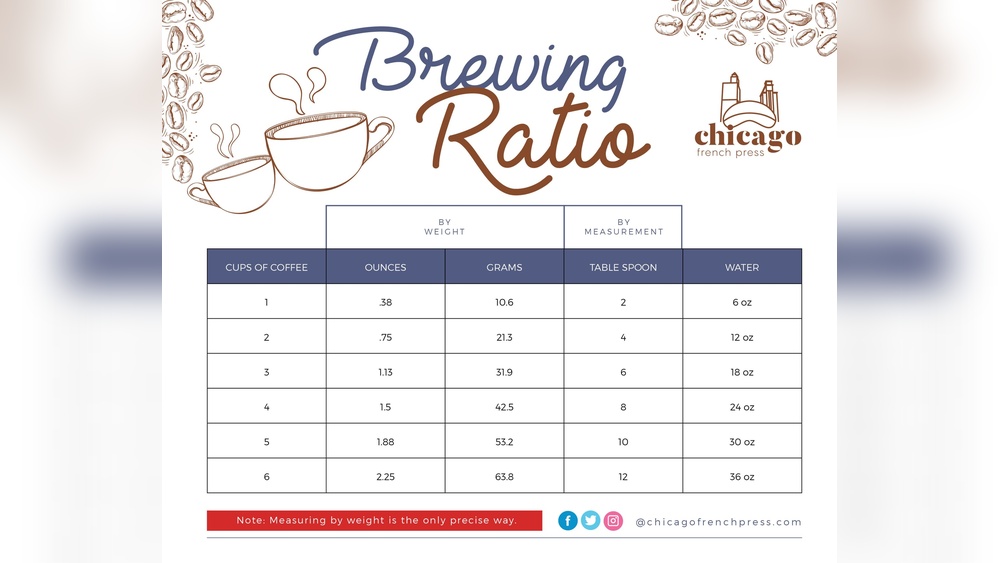
Coffee lovers know that a great cup is more than just good beans or a fancy machine. The coffee to water ratio is a key factor that can make or break your brew. Whether you like a strong espresso or a smooth pour over, getting this ratio right is essential. But the ideal ratio isn’t the same for everyone or every method. In fact, it depends on your taste, brewing style, and even the type of coffee you use.
Many home brewers wonder why their coffee tastes weak or bitter, even when they follow every step. The answer often lies in how much coffee and water they use. Small changes in these amounts can lead to big differences in flavor, strength, and aroma.
Understanding coffee-to-water ratio guide will help you make better coffee every time -no matter your experience.
In this guide, you’ll learn the basics of coffee to water ratio, how it changes across different brewing methods, and how to adjust it for your own preferences. You’ll also see common mistakes, practical tips, and clear examples. By the end, you’ll have the confidence to brew coffee that matches your taste -consistently and with ease.
What Is Coffee To Water Ratio?
The coffee to water ratio is the amount of coffee grounds compared to the amount of water used when brewing. It’s usually written as a number, like 1:15 or 1:18. The first number is coffee; the second is water. For example, a 1:16 ratio means 1 gram of coffee for every 16 grams of water.
This ratio controls the strength and taste of your coffee. A smaller ratio (like 1:12) means more coffee and a stronger cup. A larger ratio (like 1:18) means less coffee and a lighter, milder taste.
Why is this ratio so important? Because water extracts flavor from coffee grounds. Too little coffee, and your drink will taste watery or sour. Too much, and it might be bitter or harsh. The right balance gives you a cup that’s flavorful, balanced, and satisfying.
It’s easy to think that using more coffee always means better flavor, but that’s not true. If the ratio is too strong, you can get a heavy, almost muddy taste. If it’s too weak, you might taste only acidity or nothing at all.
The ratio works with other factors -like grind size, water temperature, and brew time -to create harmony in your cup.
For beginners, the ratio is the simplest and most reliable way to improve coffee at home. Instead of guessing, you get predictable results. Even if you change beans or machines, knowing your favorite ratio means you can make adjustments quickly.
Why Coffee To Water Ratio Matters
Many factors affect how coffee tastes -bean quality, grind size, water temperature, and brewing time. But ratio is one thing you can control easily and consistently. Even small changes make a big difference.
Here’s why:
- Strength: The ratio directly controls how strong or weak your coffee tastes. If you want a bold, rich cup, you use more coffee compared to water. For a light, easy-drinking cup, you use more water or less coffee.
- Extraction: The right balance helps water pull out the best flavors, not just bitterness or sourness. Coffee contains sweet, acidic, and bitter compounds. The right ratio helps water extract the sweet and complex parts, not just the harsh ones.
- Consistency: Using the same ratio means your coffee tastes the same every time. If you find a ratio you love, you can repeat it, no matter the day or mood.
- Customization: You can adjust the ratio to fit your taste -stronger or lighter. Some people want a wake-up jolt in the morning, others want a mellow sip in the afternoon. Ratio lets you control this.
Most beginners overlook the ratio, focusing only on grind or time. But even premium beans can taste bad if the ratio is off.
A less obvious reason ratio matters is that it helps you compare recipes and methods. If a friend makes great coffee, you can ask for their ratio and try it yourself. Many online recipes and cafes now list their ratios so you can copy their results at home.
Standard Coffee To Water Ratios
There is no “one-size-fits-all” ratio, but several standards are widely used. The most common is the Golden Ratio:
- Golden Ratio: 1:15 to 1:18 (1 gram coffee for every 15 -18 grams of water)
This range works for most brewing methods and suits most tastes. It gives a balanced, flavorful cup -not too strong, not too weak.
Some methods and preferences require other ratios:
- Strong coffee: 1:12 to 1:14
- Mild coffee: 1:18 to 1:20
Professional baristas and competitions use precise measurements, but at home, these guidelines help you start.
What’s interesting is that these ratios have been tested for years by coffee professionals. The Specialty Coffee Association recommends 1:18 as a starting point, but many people prefer a little more strength, landing on 1:15 or 1:16.
You might see recipes using ratios like 1:13 or 1:20. These are not mistakes -they’re just personal preferences or adjustments for certain beans or brewing styles.
Another detail is that some brewing methods -like espresso -use much smaller ratios. Don’t be surprised if you see 1:2 or 1:2.5 for espresso. That’s because espresso is concentrated and meant to be intense.
Measuring Coffee And Water
Consistency starts with measuring. You can use grams (weight) or volume (spoons and cups), but grams are more accurate. Coffee beans vary in size, density, and shape, so a scoop isn’t always the same as another.
Weighing With A Scale
The best way to measure is with a kitchen scale. Weighing both coffee and water gives you control and repeatability.
- 1 gram of water = 1 milliliter (ml)
- Most recipes use grams for both coffee and water
For example, to brew with a 1:16 ratio and 20 grams of coffee:
- 20 grams coffee x 16 = 320 grams (ml) water
This is easy to remember and scale up or down. Scales are not expensive, and many coffee scales also have timers for tracking brew time.
If you’re new to using a scale, it might feel like extra work. But after a few tries, it becomes second nature. You’ll notice your coffee tastes better and is more consistent each day.
Using Spoons And Cups
If you don’t have a scale, you can estimate:
- 1 tablespoon of ground coffee ≈ 5 -6 grams
- 1 cup (US) of water = 237 ml
But remember, this is less precise. Grounds can be packed or loose, and cup sizes vary.
For example, if you use a heaping tablespoon, you could be using 7 or 8 grams, not 5. Over several tablespoons, this difference adds up and changes the taste.
If you must use spoons, try to keep them level and use the same kind of spoon each time. For water, use a measuring cup, not a drinking mug, since mug sizes are different everywhere.
Example Calculation
Suppose you want two cups of coffee (about 16 oz or 475 ml) at a 1:16 ratio:
- 475 ml / 16 = 29.7 grams of coffee (about 5 tablespoons)
For best results, invest in a small digital scale. It’s affordable, easy to use, and makes a big difference in your brewing.
Another trick is to measure your favorite mug’s volume once, so you know exactly how much water you need each morning. Mark it on the bottom or write it down.
Coffee To Water Ratios For Popular Brewing Methods
Different brew methods extract flavors differently, so the best ratio changes. Here’s how the ratio works for common methods:
Drip Coffee Maker
- Standard ratio: 1:15 to 1:17
- Example: For 1 liter (1000 ml) of water, use 60 -67 grams of coffee
Drip makers are forgiving, but using too much or too little coffee can make your brew bitter or weak.
One tip: Some machines lose water to steam, so you may need slightly more water than you think. Also, pre-rinsing your filter (pouring hot water through it before adding coffee) helps remove paper taste and improves flavor.
Pour Over (e.g., V60, Chemex)
- Standard ratio: 1:15 to 1:17
- Example: 20 grams coffee, 300 -340 grams water (for 1 -2 cups)
Pour over lets you control water flow, so the ratio has a big effect on taste. Many fans use 1:16 as a starting point.
Pour over is sensitive to technique. If you pour water too quickly, extraction might be uneven, and the ratio will not save you. Pour slowly, in circles, for best results.
French Press
- Standard ratio: 1:12 to 1:16
- Example: 30 grams coffee, 360 grams water (about 12 oz)
French press makes a richer, fuller cup. Many prefer a stronger ratio, like 1:13.
Let the coffee steep for 4 -5 minutes for best extraction. Stirring once after adding water helps all the grounds get wet.
Espresso
- Standard ratio: 1:2 to 1:2.5 (coffee to water)
- Example: 18 grams coffee, 36 -45 grams water (for a double shot)
Espresso uses much less water, so the ratio is smaller. It’s measured as “brew ratio” -the weight of the liquid espresso vs. the dry coffee.
A classic “ristretto” shot is even stronger -about 1:1.5. For “lungo” (long shot), you use more water (1:3). Espresso ratios are very sensitive; even 1 gram more or less changes the taste.
Aeropress
- Standard ratio: 1:14 to 1:16 (for regular), 1:7 to 1:9 (for concentrated)
- Example: 17 grams coffee, 230 grams water (regular); 17 grams coffee, 120 grams water (concentrated)
AeroPress is flexible; you can adjust ratio for a milder cup or a strong “espresso-style” shot.
AeroPress recipes are creative. Some use inverted methods, others add water after brewing (like an Americano). If you like to experiment, AeroPress is perfect.
Cold Brew
- Standard ratio: 1:4 to 1:8 (for concentrate)
- Example: 100 grams coffee, 400 grams water (for concentrate)
best cold brew coffee beans is made strong and then diluted. After brewing, mix with equal parts water or milk to taste.
Cold brew takes 12 -18 hours in the fridge. If you want a ready-to-drink version, use a 1:15 or 1:16 ratio, but it will be less strong and have less shelf life.
Moka Pot (stovetop Espresso)
- Standard ratio: 1:7 to 1:10
- Example: 15 grams coffee, 100 -150 grams water (for a small pot)
Moka pots need a fine grind and a slightly stronger ratio for best results.
Don’t pack the grounds tightly; just fill the basket and level. Use medium heat and remove from stove as soon as you hear bubbling.
Siphon
- Standard ratio: 1:15 to 1:17
- Example: 25 grams coffee, 375 -425 grams water
Siphon brewing makes a clean, bright cup, and the ratio is similar to pour over.
Siphons are sensitive to grind size and timing. If you want more body, use a smaller ratio (1:15). For a lighter cup, try 1:17.
Turkish Coffee
- Standard ratio: 1:10 to 1:12
- Example: 10 grams coffee, 100 -120 grams water
Turkish coffee uses a very fine grind and a strong ratio for a rich, thick drink.
Add sugar at the start if you want it sweet. Stir as it heats, but don’t let it boil over.
Here’s a comparison of popular brewing methods and their typical ratios:
| Brewing Method | Standard Ratio | Example (Coffee:Water) | Notes |
|---|---|---|---|
| Drip Maker | 1:15 -1:17 | 60g:1000ml | Balanced, common in homes |
| Pour Over | 1:15 -1:17 | 20g:320ml | Manual, adjustable |
| French Press | 1:12 -1:16 | 30g:360ml | Full-bodied, rich |
| Espresso | 1:2 -1:2.5 | 18g:36 -45g | Strong, concentrated |
| AeroPress | 1:14 -1:16 | 17g:230ml | Flexible, travel-friendly |
| Cold Brew | 1:4 -1:8 | 100g:400ml | For concentrate |
| Moka Pot | 1:7 -1:10 | 15g:100 -150ml | Stovetop espresso |
| Siphon | 1:15 -1:17 | 25g:400ml | Bright, clean cup |
| Turkish Coffee | 1:10 -1:12 | 10g:100ml | Very strong |
How To Adjust Ratio For Taste
Everyone’s taste is different. Some like their coffee bold and intense, others smooth and mild. The ratio is your main tool for customizing.
Adjusting Strength
- For stronger coffee: Decrease the water or increase the coffee. Try 1:14 or even 1:12.
- For lighter coffee: Increase the water or decrease the coffee. Try 1:18 or 1:20.
Adjust in small steps (for example, 1 gram at a time) and taste each brew.
Don’t jump from 1:16 to 1:12 in one go. Small changes help you learn what you prefer without wasting coffee.
Common Adjustments
- If your coffee tastes weak or watery, use more coffee or less water.
- If it tastes bitter or harsh, try less coffee or more water -or check for over-extraction.
Taste can also change with the weather, your mood, or even your health. Many people prefer stronger coffee in winter and lighter coffee in summer.
Non-obvious Insight 1
Sometimes, water quality affects how the ratio works. Hard water (with minerals) can “block” flavor extraction, so you may need slightly more coffee. Soft water extracts more, so you might use less coffee for the same strength.
If you move to a new city and your coffee suddenly tastes “off,” water is often the reason. Try filtered water or a different bottled brand.
Non-obvious Insight 2
Different beans and roast levels extract differently. Light roasts often need a slightly higher coffee dose to get enough flavor, while dark roasts can be strong with less coffee. Start with the standard ratio, then adjust based on taste and bean type.
This is why some people find the same ratio perfect with one bag of coffee but too strong or weak with another.
The Science Behind Coffee Extraction And Ratio
Brewing coffee is a process called extraction -pulling flavors from ground beans into water. The ratio is important because it changes how much is extracted.
- Under-extracted: Too little coffee, too much water, or too short a brew time. Tastes sour, thin, or salty.
- Over-extracted: Too much coffee, too little water, or too long a brew time. Tastes bitter, dry, or harsh.
- Balanced: Just right; sweet, complex, and pleasant.
Extraction is usually measured as percent extraction (how much of the coffee’s mass ends up in your cup). Most experts aim for 18 -22%. If your ratio is off, you’ll miss this sweet spot.
Another detail is that not all coffee compounds extract at the same rate. Acids and fruity flavors come out early; sweetness and balance come next; bitterness comes last. The ratio, together with brew time, decides how much of each you get.
If you want to dive deeper, some cafes use refractometers to measure how much dissolved coffee is in the cup (TDS -total dissolved solids). This helps them fine-tune the ratio for each bean and method.
Practical Examples: How Ratio Changes The Result
Let’s see how the same coffee tastes with different ratios.
Suppose you brew 20 grams of coffee with:
- 300 ml water (1: 15): Strong, bold, rich cup
- 340 ml water (1: 17): Balanced, smooth cup
- 400 ml water (1: 20): Light, mild, possibly watery
You can also use this ratio to scale up for more people. Just keep the same proportion.
Try making three cups using the same beans and grind, but different ratios. Taste them side by side. You’ll be surprised how much difference small changes make. This is a great way to learn your personal preference.
Scaling Up Or Down
If you want to brew for a group, multiply your coffee and water amounts by the number of servings. For example, for 4 cups at a 1:16 ratio:
- 20 grams coffee x 4 = 80 grams coffee
- 320 ml water x 4 = 1280 ml water
But make sure your equipment (like your French press or drip maker) can hold that much.
Also, when scaling up, stir or mix the coffee to ensure all the grounds contact water evenly. In larger batches, uneven mixing can lead to weak or bitter spots.
How To Choose The Right Ratio For You
Finding your ideal coffee to water ratio is a process. Here’s how to discover what you like best:
- Start with a standard ratio (like 1: 16)
- Brew and taste your coffee
- Adjust up or down based on your preference
- Keep notes (write down the ratio, grind size, brew method, and your thoughts)
- Repeat until you find your favorite
This process is called dialing in. Baristas do it every day, and home brewers can, too.
It’s helpful to taste coffee with and without milk, sugar, or flavorings. What tastes perfect black may not be strong enough with cream.
Example: Personalizing Your French Press
Suppose you brew French press with a 1:15 ratio, but it’s too strong for you. Next time, try 1:17. If it’s too weak, go back to 1:15 or try 1:14. Over time, you’ll know exactly how much coffee and water to use for your taste.
Some people also keep a “coffee log” or journal to remember what works. Write down the date, beans, ratio, and your thoughts. This makes it easy to repeat a great cup or avoid past mistakes.
Common Mistakes And How To Avoid Them
Many coffee drinkers struggle with ratio. Here are mistakes to watch for:
- Guessing amounts: Eyeballing coffee and water leads to inconsistency. Use a scale for best results.
- Mixing volume and weight: Always use the same units (preferably grams for both coffee and water).
- Ignoring equipment size: Some brewers have max limits. Overfilling can cause weak or uneven extraction.
- Not adjusting for grind size: Finer grinds extract faster and can taste stronger. Coarser grinds need longer extraction or a stronger ratio.
- Using old coffee: Even the perfect ratio can’t fix stale or old beans.
Another mistake: forgetting to stir or agitate the grounds, especially in French press or cold brew. This can leave pockets of dry coffee, making extraction uneven.
Avoiding these mistakes will improve your coffee more than buying expensive gadgets.
Advanced Tips For Mastering Coffee Ratio
Once you’re comfortable with the basics, try these advanced ideas:
Blooming
For pour over and French press, blooming means pouring a small amount of water on the grounds first (about twice the coffee’s weight), letting it sit for 30 seconds. This releases gas and helps even extraction. The bloom water is part of the total ratio.
Some people skip blooming, but you’ll notice the difference in clarity and sweetness if you include it.
Water Temperature
Hotter water extracts more, so if you use very hot water (near boiling), you might need a slightly higher water ratio to avoid over-extraction.
A good range is 92 -96°C (197 -205°F). Too cool, and you’ll under-extract, needing more coffee or less water.
Agitation
Stirring or swirling the coffee while brewing can affect extraction. More agitation usually means faster extraction, which can make a stronger cup with the same ratio.
For example, in AeroPress, some recipes stir 20 times, others only twice. Try both and see what you prefer.
Using A Refractometer
Professional baristas sometimes measure coffee strength with a refractometer. This tool measures the dissolved solids in your cup, helping you fine-tune your ratio for perfect extraction.
While this tool is expensive, it shows how much coffee science goes into the perfect cup.
Coffee Ratio And Specialty Coffee
Specialty coffee shops and competitions are very precise with ratios. They often use:
- Weighing every dose and shot
- Testing different ratios for each bean and roast
- Sharing ratios on menus (e.g., “V60: 18g/300ml”)
They do this because every bean and roast behaves differently. You can do the same at home for better results.
Some cafes also list the “brew recipe” for each coffee, including ratio, grind size, brew time, and even water temperature. Copying these can help you learn faster.
How Water Quality Affects Ratio
Not all water is equal. Tap water, filtered water, or bottled water can change how coffee tastes and how the ratio works. Water with lots of minerals (hard water) can block flavors, while very soft water can over-extract bitterness.
Experts recommend water with:
- Total Dissolved Solids (TDS): 75 -250 ppm
- Neutral pH (6.5 -7.5)
- Low chlorine
If your water tastes bad on its own, it won’t make good coffee -even with the perfect ratio.
A simple home test: make coffee with your tap water and with bottled spring water. If the bottled water cup tastes much better, consider using it for special occasions.
Comparing Coffee To Water Ratios In Different Cultures
Coffee traditions around the world use different ratios for unique styles.
| Culture/Style | Ratio | Taste |
|---|---|---|
| Italian Espresso | 1:2 | Intense, syrupy |
| American Drip | 1:15 -1:18 | Balanced, smooth |
| Vietnamese Iced Coffee | 1:8 -1:10 | Very strong, sweetened |
| Scandinavian Brew | 1:18 -1:20 | Light, mild |
| Turkish Coffee | 1:10 | Thick, robust |
These differences show that ratio is a matter of tradition as well as taste.
For example, Scandinavian countries like Sweden and Finland prefer lighter, milder coffee with more water. In Vietnam, strong coffee is mixed with sweetened condensed milk to balance the intensity. Each culture’s ratio fits its history and habits.
Coffee To Water Ratio For Different Roast Levels
Roast level changes how much flavor is extracted and can affect your ideal ratio.
- Light roast: More dense, less soluble. May need a stronger ratio (e.g., 1:15)
- Medium roast: Balanced; works well at standard ratios (1:16 -1:17)
- Dark roast: More soluble; can be extracted with less coffee (e.g., 1:17 -1:18)
Try adjusting your ratio when switching from a light to a dark roast to avoid over- or under-extraction.
For example, if you love dark roast at 1:16, you might find light roast is too weak at the same ratio. Try 1:14 or 1:15 for light beans.
Coffee Ratio And Grind Size
Grind size and ratio go hand in hand. Finer grinds (like for espresso) extract more quickly, so you use less water. Coarser grinds (like for French press) extract slower, so you may need a stronger ratio to get enough flavor.
- Finer grind: Use less water (smaller ratio)
- Coarser grind: Use more coffee or less water (stronger ratio)
If you change grind size, be ready to adjust your ratio.
One practical tip: If you switch from a medium grind to coarse for French press, try using 5 -10% more coffee until you find the right balance.
Ratio For Decaf And Flavored Coffees
Decaf coffee and flavored blends can taste weaker. You may need a slightly stronger ratio (more coffee) to reach the same taste as regular beans. Start with 10% more coffee and adjust based on taste.
This is because decaf beans lose some soluble compounds during processing. Flavored coffees often have added oils or sugars that dilute the pure coffee flavor.
Making Coffee For A Group: Large Batch Ratios
Brewing for many people? The same ratio rules apply, but it’s easy to make mistakes with big batches.
- Use a scale to measure large amounts
- Mix well to ensure even extraction
- Account for some water lost to evaporation
For example, for a 12-cup drip maker (about 1.8 liters), at a 1:16 ratio:
- 1800 ml / 16 = 112.5 grams of coffee
Write down your batch ratio for next time.
Also, pre-wet the coffee grounds for large batches to avoid dry pockets. Stir gently before starting the brew.
Ratio Adjustments For Milk-based Drinks
If you add milk or cream, your coffee may taste weaker. Consider using a slightly stronger ratio (1:14 or 1:15) so the flavor stands out.
- Lattes, cappuccinos: Espresso base is strong enough
- Café au lait, white coffee: Brew with a stronger ratio to keep flavor after adding milk
For example, if you usually use 1:16 for black coffee, try 1:14 if you plan to add a lot of milk.
Ratio For Iced Coffee And Cold Brew
For iced coffee, brew stronger than normal because ice will dilute the drink.
- Hot-brewed iced coffee: Use 1:12 or 1:13, then pour over ice.
- Cold brew concentrate: Use 1:4 to 1:8, then dilute with water or milk.
This keeps the taste balanced even after melting.
A practical tip: If you make iced coffee often, freeze some coffee into ice cubes. Use these instead of regular ice to keep your drink strong as it cools.
How To Record And Track Your Ratios
Keeping a coffee log helps you remember what works. Write down:
- Date and time
- Bean type and roast
- Grind size
- Brew method
- Coffee and water amounts (in grams)
- Ratio
- Taste notes
This will help you improve and repeat your favorite brews.
Some people use a notebook, others an app. The important part is to record enough detail to repeat a great cup later.
Frequently Asked Questions
What Is The Best Coffee To Water Ratio For Beginners?
A good starting point is a 1:16 ratio (1 gram of coffee for every 16 grams of water). This works for drip, pour over, and French press. Adjust from there based on your taste.
Can I Use Tablespoons And Cups Instead Of A Scale?
Yes, but it’s less precise. A tablespoon of coffee is about 5 -6 grams. A US cup is 237 ml. Results can vary, so a scale is better for consistency.
If you must use spoons, try to pack the coffee the same way each time (not heaped or loose).
How Does Grind Size Affect The Coffee To Water Ratio?
Finer grinds extract more quickly and can taste stronger with the same ratio. Coarser grinds need more coffee or less water to reach the same strength. Always adjust ratio when changing grind size.
For example, if your coffee tastes weak after switching to a coarser grind, try adding more coffee or reducing water.
Does The Coffee To Water Ratio Change For Cold Brew?
Yes. Cold brew uses a much stronger ratio (1:4 to 1:8) to make a concentrate, which you dilute before drinking. Hot-brewed coffee uses a weaker ratio (1:15 to 1:18).
If you want ready-to-drink cold brew, use a 1:15 ratio, but it will be less concentrated and may taste less smooth.
Why Does My Coffee Taste Bitter Or Sour Even With The Right Ratio?
Bitterness or sourness can come from over-extraction (too much coffee, too little water, or too long a brew time) or under-extraction (not enough coffee, too much water, or too short a brew time). Also, check water temperature, grind size, and bean freshness.
Remember, ratio works together with time, temperature, and grind. If you fix one but not the others, problems can remain.
Final Thoughts
Mastering the coffee to water ratio is one of the most important steps for making great coffee at home. It’s simple, but powerful -the right ratio brings out the best in your beans and matches your personal taste. Start with the standard ratios for your brew method, measure carefully, and adjust as you go. Remember, small changes can make a big difference. Keep notes, experiment, and enjoy the process. With time and practice, you’ll create your own perfect cup, every time.
For more on the science of coffee brewing, check out the Specialty Coffee Association’s official guidelines.