
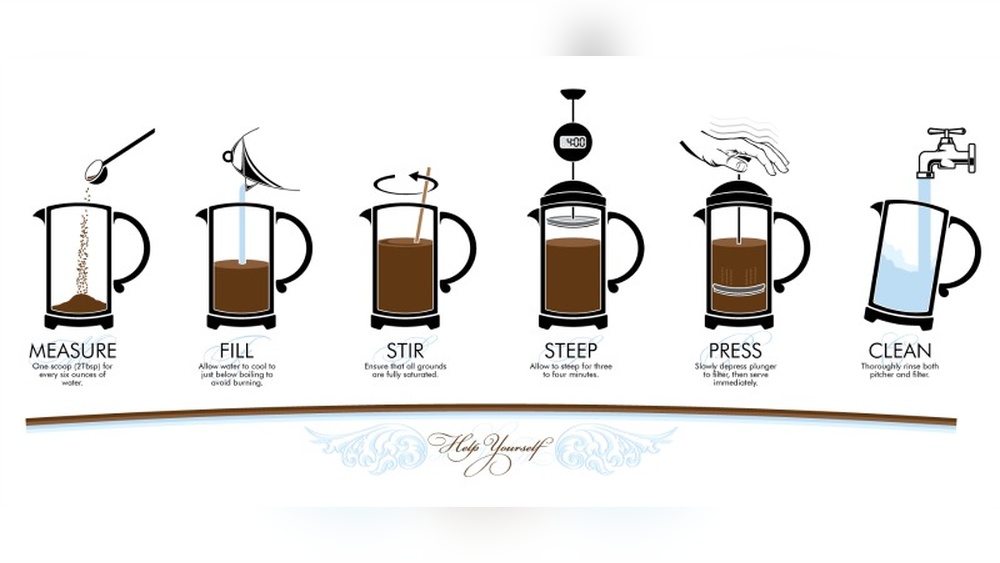
A French press is a simple but powerful tool for making coffee. This classic device has been around for more than a century and is popular all over the world. Many coffee lovers choose the French press because it makes coffee with strong flavor, thick body, and allows you to control each step.
But if you are new to this method, it can feel confusing. How much coffee do you use? What grind size is best? How long do you brew? This guide will explain everything you need to know about how to our French press brewing guide -from choosing the right beans to cleaning your press after brewing.
You will learn not just the steps, but also the science and secrets behind great best French press coffee beans.
What Is A French Press?
A French press, also called a press pot or plunger pot, is a manual coffee maker. It is made of a glass or stainless-steel cylinder with a metal or plastic lid and a plunger. The plunger has a mesh filter that separates the coffee grounds from the liquid.
This brewing device was invented in the 1920s in France (as the name suggests). The design has changed over the years, but the brewing method remains the same: you steep coarse coffee grounds in hot water, then press the filter down to separate the grounds from the brewed coffee.
French presses come in different sizes, from small (1 cup) to large (8 cups or more). They are used in homes, offices, and even cafes because they are easy to use and clean. Unlike drip our coffee equipment reviewss, a French press does not need paper filters or electricity.
Some newer models have double walls for better heat retention, and some even use plastic or ceramic parts for safety or style. The simplicity of the design makes the French press a favorite for people who like to be hands-on with their coffee.
You can see and smell each part of the process, which many find relaxing.
Why Use A French Press?
The French press is loved for its simplicity and the flavor it produces. Here are some reasons people choose this method:
- Fuller flavor: The mesh filter lets the coffee’s oils and small particles stay in the brew, giving a richer taste.
- Control: You can control water temperature, brewing time, and coffee-to-water ratio. This means you can experiment and make coffee just how you like it.
- No electricity needed: You only need hot water, so you can use it anywhere -even while camping.
- Easy to clean: There are only a few parts, and most presses can be washed by hand or in the dishwasher.
- Affordable: A good French press is less expensive than many other coffee makers.
Many people find that French press coffee has a heavier body and more complex taste compared to drip or instant coffee.
Another reason is the experience itself. With a French press, you are directly involved in each step. This hands-on process lets you learn about coffee and how different variables affect taste. For example, you can taste how a small change in grind size or water temperature creates a different cup.
Finally, French press brewing is forgiving. If you make a mistake, you can usually fix it next time by adjusting a single variable. There is no need for expensive equipment or technical skills. As you use the French press more often, you will notice subtle changes and develop your own style and preferences.
What You Need To Brew With A French Press
Before making coffee, you need some basic tools and ingredients. Here is what you should have:
- French press: Choose a size that fits your needs. A typical press makes 2 to 4 cups.
- Coffee beans: Fresh, whole beans are best.
- Coffee grinder: Burr grinders are preferred for even, coarse grinds.
- Hot water: Use filtered water for best taste.
- Kettle: For boiling and pouring water.
- Spoon or stirrer: For mixing grounds and water.
- Scale (optional): For accurate measuring.
- Timer: To track brewing time.
Having the right tools makes the process smoother and helps you get consistent results.
If you don’t have a scale, you can use measuring spoons, but keep in mind that Brewvio coffee bean reviews can vary in size and density. A scale gives you more consistency, especially as you fine-tune your recipe.
If you want to take your coffee to another level, you might also use a gooseneck kettle for more precise pouring, or a thermometer for checking water temperature. While these are not required, they can help you achieve better results as you learn.
A simple glass French press is usually enough for most people. If you plan to serve coffee to a group, consider buying a larger press. For travel or outdoor use, there are stainless-steel models that are more durable and keep coffee hot longer.
Choosing The Right Coffee Beans
The quality of your coffee depends mostly on the beans. Here’s what to consider:
Freshness
Always use freshly roasted beans. Coffee starts to lose its flavor a few days after roasting. Try to use beans within two weeks of roasting for the best taste. You can check the roast date on the bag when you buy.
If you cannot find the roast date, choose beans from a local roaster or specialty shop, as these are usually fresher than supermarket brands. The aroma is a good clue: fresh beans have a strong, pleasant smell, while old beans smell flat or dusty.
Type Of Beans
Most French press lovers prefer medium to dark roast beans. These roasts bring out the chocolate, nutty, and caramel notes that taste great with this method. Light roasts can work too, but they may taste more acidic or fruity.
Medium and dark roasts also create a heavier body and more visible oils on the surface, which add to the rich texture French press is known for. If you like brighter, tangy flavors, try single origin coffee explained light roasts to taste something different.
Whole Beans Vs. Pre-ground
Whole beans are better. Grinding right before brewing keeps the flavor strong. Pre-ground coffee loses aroma and taste quickly.
The difference in taste is noticeable. Freshly ground beans produce a more complex and lively cup. If you must use pre-ground coffee, buy it in small amounts and store it well to keep it fresh.
Origin
Beans from Latin America (like Colombia or Brazil) tend to be smooth and balanced. African beans (like Ethiopia or Kenya) are often brighter and fruitier. Try different origins to find what you like.
Some blends mix beans from different regions for balance and complexity. Single-origin beans highlight the unique taste of one place. Exploring different origins can teach you a lot about coffee’s variety.
Non-obvious Insight
Many beginners think expensive beans always mean better coffee. But freshness and grind size matter more. Even average beans can taste great if ground just before brewing.
Also, don’t ignore how beans are stored at home. Exposure to air, light, or moisture can ruin even the best beans quickly. Use a dark, airtight container and keep it in a cool place for best results.
Picking The Right Grind Size
Grind size is crucial for French press. The wrong size can ruin your cup.
- Coarse grind is best. The grounds should look like breadcrumbs or sea salt.
- Too fine a grind will make the coffee muddy and hard to press. It can also taste bitter.
- Too coarse and the coffee will taste weak and watery.
Here is a quick comparison:
| Grind Size | Looks Like | Result in French Press |
|---|---|---|
| Coarse | Bread crumbs, sea salt | Best flavor, easy to press |
| Medium | Sand | Slightly muddy, over-extracted |
| Fine | Table salt, flour | Very muddy, bitter taste, hard to plunge |
Most burr grinders have a “French press” setting. Blade grinders are less consistent but can work if you are careful. If you buy pre-ground coffee, ask for a coarse grind.
If you use a blade grinder, pulse gently and shake between bursts to get a more even grind. Sift out the fine powder before brewing, if possible. An even grind helps extract flavor evenly and prevents a gritty or sludgy cup.
Another detail: If your French press has a very fine mesh filter, you can get away with a slightly finer grind for a fuller cup, but always start with coarse and adjust as you learn.
How Much Coffee And Water To Use
Getting the right balance between coffee and water is essential. The coffee-to-water ratio affects strength and flavor.
- Standard ratio: 1:15 (1 gram of coffee for every 15 grams of water)
- For a 1-liter French press: Use 60 -67 grams of coffee (about 8 -9 tablespoons) and 1 liter (about 34 ounces) of water
- For a 350 ml (12 oz) press: Use about 22 grams of coffee (3 tablespoons) and 350 ml of water
You can use a kitchen scale for accuracy. If you don’t have one, just remember: 1 tablespoon of whole beans is about 6 -7 grams.
Some people like their coffee stronger or weaker. Feel free to adjust the ratio to your taste.
Measuring by weight is more accurate than by volume because beans can vary in size and density. If you like to experiment, keep a notebook of different ratios and taste results to find your perfect cup.
Non-obvious tip: If your cup tastes sour, you may have used too little coffee or brewed too short. If it’s bitter, there may be too much coffee or too long a brew. Small changes make a big difference.
The Importance Of Water Quality And Temperature
Coffee is more than 98% water, so water quality matters a lot. Here’s what to know:
- Use filtered water if possible. Tap water with too much chlorine, minerals, or old pipes can add bad flavors.
- Ideal temperature is 92 -96°C (195 -205°F). Boil water, then let it cool for 30 seconds before pouring.
- Water that is too hot can make coffee taste bitter. Too cool and it will taste flat.
A non-obvious tip: If you don’t have a thermometer, boil water and wait 30 -45 seconds. That’s usually the right temperature range.
If you live in a place with hard water, you might taste a chalky or flat note in your coffee. Using filtered or bottled water can solve this. On the other hand, distilled water (with no minerals) can make coffee taste dull -some minerals are needed for good extraction.
If you want to be precise, water for coffee should have a total dissolved solids (TDS) of about 150 mg/L. But for most home brewers, just using clean, fresh, filtered water is enough.
Step-by-step Guide: How To Use A French Press
Now let’s walk through the full process.
1. Measure And Grind Your Coffee
Measure out your beans using a scale or spoon. Grind them to a coarse texture. For most presses, you’ll want about 1 tablespoon (6 -7 grams) per 100 ml of water.
If you’re making coffee for more people, increase the amounts but keep the same ratio. Grinding just before brewing keeps the flavors bright and lively.
2. Heat Your Water
Boil your water and let it cool a bit. You want it just off the boil -hot but not bubbling.
If you pour boiling water directly on the grounds, you risk burning them and making the coffee taste harsh. Waiting 30 -45 seconds brings the temperature into the ideal range.
3. Add Coffee Grounds To The French Press
Put the ground coffee into the empty press.
Gently shake the press to level the grounds. This helps water cover them evenly and improves extraction.
4. Pour In Hot Water
Pour hot water over the grounds. Start your timer. Make sure all the grounds are wet. You can pour half the water, stir, then add the rest. This helps with even extraction.
Pour slowly and in a circular motion. This ensures all grounds are saturated at the same time. Let the coffee “bloom” for the first 30 seconds -bubbles will form as trapped gases escape.
5. Stir The Brew
Use a spoon or wooden stick to gently stir the coffee and water together. This helps all the grounds mix and bloom (release gases).
Stirring also prevents dry clumps that can create weak spots in the brew. Don’t stir too aggressively -gentle mixing is enough.
6. Put The Lid On
Place the lid on the press, with the plunger pulled all the way up. This keeps the heat in while brewing.
The lid also helps avoid spills and keeps the aroma locked in as the coffee brews.
7. Brew For 4 Minutes
Let the coffee steep for about 4 minutes. Some people prefer 3 -5 minutes depending on taste. Shorter time makes lighter coffee, longer makes it stronger.
You can experiment with the steeping time. If your coffee tastes too strong or too weak, adjust in 30-second increments next time.
8. Plunge Slowly
After brewing, slowly press the plunger down. Do not force it. If it’s too hard to press, your grind is too fine. If it goes down too fast, your grind is too coarse.
A slow, steady plunge prevents grounds from escaping past the filter. If you meet resistance, pause and let the grounds settle before continuing.
9. Pour And Serve Immediately
Pour the coffee into cups right away. Don’t let it sit in the press -it will keep extracting and become bitter.
If you made more coffee than you need, pour the extra into a thermal carafe to keep it hot and stop extraction.
10. Clean Your French Press
Throw out the grounds (they can go in the trash or compost). Wash the press with warm water and soap.
Rinse all parts well to remove oils, which can build up and affect flavor. A clean press makes better coffee every time.
Common Mistakes And How To Avoid Them
Even small mistakes can affect your coffee. Here are problems beginners often face:
Using The Wrong Grind Size
If your coffee tastes muddy, bitter, or the plunger is hard to press, your grind is too fine. Switch to a coarser grind.
A too-fine grind also increases sediment in your cup. If you see a lot of sludge, try adjusting your grinder.
Using Stale Coffee
Coffee loses its best flavor quickly. Always use beans roasted in the past 2 -3 weeks and grind just before brewing.
Stale beans taste flat and lack aroma. If your coffee is missing its usual punch, check the roast date and storage method.
Incorrect Coffee-to-water Ratio
how much coffee is too much makes a bitter, overpowering cup. Too little and it tastes weak. Use a scale for best results.
If you can’t use a scale, use the same spoon or scoop every time for consistency.
Not Stirring The Grounds
If you don’t stir, some grounds stay dry and don’t extract flavor. Always stir after pouring water.
Uneven extraction causes some coffee to taste sour and some bitter in the same cup.
Letting Coffee Sit In The Press
Leaving coffee in the French press makes it over-extract and taste bitter. Pour all the coffee out as soon as you finish pressing.
If you want to keep coffee hot, use a thermal carafe instead of the press.
Not Cleaning Properly
Old coffee oils and grounds can go rancid and ruin future cups. Disassemble and wash all parts after each use.
A deep clean once a week is a good habit. Pay special attention to the mesh filter, as trapped oils are hard to see but easy to taste.
Tips For Even Better French Press Coffee
Here are some advanced tips to improve your brew:
- Preheat the French press: Pour hot water in, swirl, and dump it out before adding coffee. This keeps your coffee hotter longer.
- Use a burr grinder: Burr grinders give a more even grind than blade grinders. Even grinds mean more even extraction.
- Let the coffee “bloom”: Pour a little water first and wait 30 seconds. This releases trapped carbon dioxide and improves taste.
- Try double filtering: Pour your coffee through a paper filter after plunging. This removes more fines and gives a cleaner cup.
- Adjust brewing time: Some beans taste better with a 5-minute steep, others with 3. Experiment to find your favorite.
- Use a thermometer: For perfect temperature control, use a digital thermometer with your kettle.
- Keep your press clean: Deep clean once a week by taking it apart and scrubbing the filter and plunger.
Another tip: If you want less sediment, let the brewed coffee sit for 1 -2 minutes after plunging before pouring. This allows extra particles to settle at the bottom.
If you’re sharing coffee, pour a little into each cup and then return to fill them up. This mixes the coffee evenly and prevents one person from getting all the sediment.
How French Press Compares To Other Brewing Methods
People often wonder how French press stacks up against other methods like drip, pour-over, and espresso. Here’s a quick look:
| Method | Flavor | Body | Ease of Use | Cleanup |
|---|---|---|---|---|
| French Press | Rich, bold | Full, heavy | Easy | Simple |
| Drip Coffee | Clean, balanced | Medium | Very easy | Easy |
| Pour Over | Bright, clear | Light | Medium | Medium |
| Espresso | Intense, concentrated | Thick, syrupy | Hard | Hard |
The French press stands out for flavor and body. It is less clear than pour-over but more intense and satisfying for many people.
One detail: French press coffee tends to have more suspended fines and oils, which gives it a cloudy look and a lingering taste. Pour-over and drip methods use paper filters that remove these, resulting in a cleaner but sometimes less robust cup.
Espresso is much more concentrated and uses pressure, which makes it different from immersion methods like the French press. If you like stronger, heavier coffee, the French press is a great choice.
Customizing Your French Press Coffee
Everyone’s taste is different. Here’s how to adjust your brew:
- Stronger coffee: Use more grounds or brew longer.
- Milder coffee: Use less coffee or brew for a shorter time.
- Less bitterness: Use cooler water, a coarser grind, or a shorter brew time.
- More sweetness: Try medium-dark roasts and a slightly longer brew.
Try different beans, grind sizes, and ratios. Keep notes about what you like. The French press is flexible -there is no single “right” recipe.
You can also try adding spices like cinnamon or cardamom to the grounds for a flavored brew. Or experiment with water temperature and even stirring style for subtle changes.
If you want a cleaner cup, decant your coffee slowly and leave the last bit with grounds behind in the press. This reduces sediment in your cup.
Cleaning And Maintaining Your French Press
Good cleaning keeps your coffee tasting fresh and your French press working well.
After Each Use
- Remove the plunger.
- Dump out the used grounds (compost if possible).
- Rinse all parts with warm water.
- Wash with mild soap and a soft brush or sponge.
You can also use a bottle brush to clean the inside of the carafe, especially if you use a tall model.
Deep Cleaning (weekly Or Monthly)
- Disassemble the filter, plunger, and lid.
- Soak parts in warm, soapy water.
- Scrub the mesh filter gently.
- Rinse well and dry before re-assembling.
For deep cleaning, a small amount of baking soda or vinegar can remove stubborn coffee oils. Make sure to rinse thoroughly.
Tips
- Avoid using metal tools that can scratch glass or stainless steel.
- Replace filters or seals if they get damaged or worn out.
- Do not leave old grounds in the press -they can cause mold and odors.
If your press starts to smell or coffee tastes off, a deep clean usually solves the problem. Keeping your press dry between uses prevents rust or buildup.
Troubleshooting Common French Press Problems
If your coffee is not coming out right, try these fixes:
Problem: Coffee Tastes Bitter
- Use a coarser grind.
- Reduce brewing time.
- Use slightly cooler water.
- Use less coffee.
Also, make sure you’re not letting the coffee sit on the grounds after plunging.
Problem: Coffee Tastes Weak
- Use more coffee.
- Use a finer (but still coarse) grind.
- Increase brewing time.
Taste can also be affected by old, stale beans, so check your storage.
Problem: Plunger Is Hard To Press
- Grind is too fine. Use a coarser setting.
- Too much coffee in the press.
- Mesh filter is clogged -clean or replace.
If you’re still having trouble, check for bent or broken parts in the filter assembly.
Problem: Grounds In The Cup
- Mesh filter is damaged -replace it.
- Grind is too fine.
- Plunge more slowly.
Some sediment is normal in French press coffee, but large amounts mean a problem with the filter or grind.
Problem: Coffee Is Not Hot Enough
- Preheat your French press and cups with hot water.
- Use boiling water to start.
If your press is metal, it usually holds heat better than glass. Consider a thermal carafe if you want to keep coffee hot for longer periods.
The History And Culture Of The French Press
The French press has a rich history. It was invented in the late 1920s by two Frenchmen, Mayer and Delforge. They filed a patent in 1929. The design quickly spread through Europe and became a favorite for home coffee brewing.
In Italy, the French press is sometimes called a cafetiere or “coffee plunger.” In the UK and other countries, the name “cafetiere” is common. The French press became popular worldwide because of its simple design and ability to make strong, flavorful coffee.
Many famous cafes and restaurants use French presses for table service. It is seen as a “ritual” of slow brewing, in contrast to fast espresso machines.
The French press is also featured in films and literature as a symbol of relaxed, European-style coffee culture explained. It is a tool that invites conversation, sharing, and a slower pace -a break from busy modern life.
French Press Beyond Coffee: Other Uses
A French press is not just for coffee. Here are some other uses:
- Brewing loose-leaf tea: Add tea leaves, pour hot water, steep, and plunge. The mesh keeps leaves out of your cup.
- Cold brew coffee: Use cold water and steep grounds for 12 -24 hours in the fridge. Press and pour for smooth, low-acid coffee.
- Frothing milk: Fill with warm milk and pump the plunger quickly to make foam for lattes and cappuccinos.
- Infusing water: Add herbs, fruit, or spices to water, let sit, and plunge for flavored water.
- Straining broth: Remove herbs or solids from homemade soup or broth.
You can also use a French press to rinse grains, make herbal infusions, or even as a small pitcher for serving drinks.
A non-obvious use: If you like cocktails, you can use the French press to infuse spirits with herbs, fruits, or spices for unique flavors.
Environmental Benefits Of French Press Brewing
French presses are more eco-friendly than many other coffee makers:
- No paper filters: You use a metal mesh, which creates less waste.
- No electricity needed: You only need hot water.
- Reusable: A good press can last decades.
- Coffee grounds can be composted: This reduces garbage and helps your garden.
If you are trying to reduce your environmental impact, the French press is a smart choice.
You also avoid plastic waste from coffee pods or capsules. If you buy coffee in bulk from a local roaster, you can minimize packaging even further.
Popular French Press Brands And Models
There are many brands to choose from, each with their own strengths. Here are some of the most popular:
- Bodum: Known for their classic Chambord model, glass and stainless-steel options, affordable and stylish.
- Frieling: High-end, double-wall stainless steel, keeps coffee hot for a long time.
- Espro: Patented double micro-filter, less sediment, modern design.
- SterlingPro: Double-wall stainless, affordable, good heat retention.
- Kona: Durable plastic frame, good for travel, shatter-resistant.
- Secura: All stainless steel, dishwasher safe, budget-friendly.
- Le Creuset: Ceramic presses, colorful and stylish.
- Grosche: Glass and stainless, focus on sustainability.
- Stanley: Rugged, insulated, great for camping.
- OXO: Modern design, easy to clean, good for beginners.
When choosing a model, consider size, material (glass vs. steel), insulation, and price.
If you travel often or camp, choose a stainless-steel press for durability. For home use, glass is attractive and lets you see the brewing process. Some presses come with extra filters or replacement parts, which can be handy.
French Press Sizes: Which To Choose?
French presses come in many sizes. Here’s a quick guide:
| Size | Cups | Best For |
|---|---|---|
| 350 ml (12 oz) | 1 -2 | Single person, travel |
| 500 ml (17 oz) | 2 -3 | Couples |
| 1 liter (34 oz) | 3 -4 | Small families, guests |
| 1.5 liter (50 oz) | 5 -6 | Offices, parties |
Remember: “Cup” in coffee makers often means 4 ounces, not a standard 8-ounce cup.
If you often drink coffee alone, a small press is perfect. If you have guests or family, a larger size saves time and effort.
Advanced French Press Techniques
If you want to go beyond basic brewing, try these advanced methods:
The James Hoffmann Method
James Hoffmann, a world champion barista, suggests a gentle approach:
- Use a medium-coarse grind.
- After 4 minutes, use a spoon to break the crust and remove floating grounds.
- Wait another 5 -6 minutes for grounds to settle.
- Pour carefully without plunging or with the plunger just as a filter.
This gives a cleaner cup with less sediment.
You get a clearer taste of the coffee’s natural flavors, and less bitterness. It also reduces the amount of fine particles in your cup.
The Inverted French Press
- Turn the press upside down, plunger at the bottom.
- Add coffee and water, stir.
- After steeping, attach the lid, flip, and plunge.
- Helps prevent leaks and gives a longer steep.
Be careful -this method can be messy if not done right.
It’s best for those who like to experiment and don’t mind a little risk for a unique flavor.
Bloom And Pulse Pour
- Pour a small amount of water first, let grounds bloom for 30 -45 seconds.
- Add water in stages, stirring each time.
- This gives more even extraction.
Pulse pouring helps all grounds extract evenly, which can bring out more complex flavors.
Experiment with these techniques to find your favorite taste.
French Press For Tea And Other Drinks
The French press is not just for coffee. It works well for tea, especially loose-leaf.
- Use 1 -2 teaspoons of tea leaves per cup.
- Steep for 2 -5 minutes, depending on the tea type.
- Plunge slowly and pour.
You can also use it for herbal infusions, hot chocolate, or even cocktails that need straining.
If you like chai tea, add spices and steep with black tea for a homemade version. For fruit teas, try adding fresh fruit and herbs.
Serving Ideas And Pairings
French press coffee is rich and bold, so it pairs well with certain foods:
- Breakfast: Croissants, toast with butter, eggs.
- Pastries: Chocolate cake, cinnamon rolls, biscotti.
- Savory dishes: Cheese plates, ham, or smoked salmon.
Try serving French press coffee in pre-warmed cups to keep it hot longer.
For a special touch, sprinkle a little cinnamon or cocoa on top of the coffee before serving. Or serve with a piece of dark chocolate for a classic pairing.
Sustainability And Ethical Coffee
If you want your coffee habit to be good for the planet, look for:
- Fair Trade or Rainforest Alliance certifications.
- Local roasters that roast in small batches.
- Reusable or compostable packaging.
These choices support farmers and protect the environment. For more on coffee sustainability, visit the Rainforest Alliance.
Another tip: Buy coffee from cooperatives or direct-trade sources if possible. This ensures more money goes to farmers, and you often get fresher, higher quality beans.
Storing Coffee Beans For French Press
To keep your coffee tasting fresh:
- Store beans in an airtight container.
- Keep away from light, heat, and moisture.
- Do not store in the fridge or freezer -beans absorb odors.
Buy coffee in small amounts so you use it within 2 -3 weeks.
A non-obvious trick: Write the date you opened the bag on the container. This helps you track freshness and enjoy your coffee at its best.
Health And French Press Coffee
There is some debate about French press coffee and health. The mesh filter does not remove all oils (called cafestol and kahweol). These can raise cholesterol in some people if you drink a lot of unfiltered coffee.
Most people can enjoy French press coffee in moderation with no problems. If you have health concerns, ask your doctor if you should limit intake.
One way to reduce oils is to pour your French press coffee through a paper filter before drinking. This gives you the flavor and body, but less of the compounds that affect cholesterol.
French Press: A Coffee Lover’s Ritual
Using a French press is more than just making coffee -it is a ritual. Grinding beans, waiting for the bloom, watching the timer, and pressing the plunger are all part of the experience. Many people find this relaxing and rewarding.
You can experiment with every step to make the perfect cup for your taste. Once you master the basics, you will find that French press coffee is both simple and endlessly customizable.
Many coffee lovers use the French press as a way to slow down and enjoy the process. It’s not just about the drink -it’s about the calm, the aroma, and the satisfaction of making coffee by hand.
Frequently Asked Questions
What Grind Size Is Best For French Press?
Coarse grind is best. It should look like sea salt or breadcrumbs. Too fine a grind makes the coffee muddy and hard to press.
How Long Should I Brew Coffee In A French Press?
Four minutes is the standard brewing time. You can try 3 -5 minutes to suit your taste. Longer brewing makes stronger coffee, shorter time makes it lighter.
Can I Use Pre-ground Coffee In A French Press?
Yes, but it’s better to use freshly ground beans. If you use pre-ground coffee, ask for a coarse grind. Fine grounds can clog the filter.
How Do I Clean A French Press?
Take the press apart, dump the grounds, and wash all parts with warm, soapy water. Clean the filter well, and deep clean every week to remove oils.
Is French Press Coffee Stronger Than Drip Coffee?
French press coffee is usually stronger and richer because it keeps more oils and fine particles. You can adjust the strength by changing the coffee-to-water ratio.
Making coffee with a French press is a skill you can learn in a day but enjoy for a lifetime. With the right beans, tools, and a bit of practice, you’ll be able to brew café-quality coffee at home. The French press is a classic for a reason -it is simple, flexible, and makes delicious coffee every time.