
Making best cold brew coffee beans coffee at home is one of the most rewarding experiences for any coffee lover. The rich, smooth taste, the gentle sweetness, and the lower acidity make cold brew a favorite, especially on warm days. But despite its growing popularity, many people still find the process confusing.
How much coffee should you use? What grind size is best? And what about the steeping time? This guide will answer every question, guide you through each step, and reveal tips that even some regular cold brew fans miss.
Whether you’re just starting or aiming to perfect your method, this article will cover everything about cold brew: from understanding the science behind it, choosing the right beans and equipment, step-by-step preparation, to experimenting with flavors and troubleshooting common problems. By the end, you’ll feel confident to make delicious cold brew at home, tailored to your taste.
What Is Cold Brew Coffee?
Cold brew coffee is made by steeping coarse ground coffee in cold water for a long period, usually 12 to 24 hours. Unlike hot brewed coffee, no heat is involved. This slow extraction process gives cold brew its unique flavor -less bitterness, more sweetness, and a smoother finish.
Cold brew is not the same as iced coffee. Iced coffee is brewed hot and then cooled down with ice. Cold brew is never heated during brewing, which changes the taste and even the chemistry of the drink.
You’ll notice cold brew feels smoother and less sharp on your tongue. The gentle method pulls out sweet and chocolatey notes, while holding back sour and bitter flavors. That’s why many people who normally avoid black coffee enjoy cold brew, even without sugar or milk.
Many cafes now serve cold brew, but homemade cold brew can be even better (and much cheaper). You control the beans, the ratio, and the steeping time. Plus, a single batch can last up to two weeks in the fridge, making it perfect for busy mornings.
Another advantage is its versatility. Once you have the concentrate, you can mix it with water, milk, tonic, or even use it in desserts. This flexibility makes cold brew ideal for households with different coffee tastes.
The Science Behind Cold Brew
Understanding why cold brew tastes so different starts with the extraction process. When you brew coffee with hot water, you pull out acids, oils, and other compounds quickly. Some of these create bitterness or astringency. Cold water extracts flavors much more slowly.
This means you get fewer bitter compounds and more sweet, chocolatey, or fruity notes, depending on the beans.
Cold brew is also less acidic -often around 67% less than hot brewed coffee. That’s why people with sensitive stomachs often prefer cold brew. But be careful: cold brew can be more concentrated in caffeine, especially if you drink it without diluting.
What actually happens during cold brewing? Hot water dissolves solids quickly, releasing both desirable and undesirable flavors. Cold water only dissolves some compounds, mainly those that are more soluble or less dense. This is why cold brew tends to lack the sharpness or sourness of hot coffee, and why it’s naturally a bit sweeter.
Also, some antioxidants and aromatic oils are left behind, how to make cold brew at home taste different from what you might expect even with the same beans.
Interesting example: If you try making cold brew and hot coffee with the same beans, the cold brew will often taste like a new drink. You might notice chocolate or caramel notes you’ve never tasted before.
It’s also important to know that cold brew is usually brewed as a concentrate. This means it’s stronger than regular coffee, so you need to dilute it before serving. If you drink it straight, the caffeine content can be quite high -sometimes double a regular cup.
Why Make Cold Brew At Home?
- Cost savings: A single bottle at a coffee shop can cost $4 or more. A homemade batch costs a fraction of that.
- Customization: You choose the beans, the roast, the strength, and the flavor.
- Convenience: Make a batch ahead, and you have coffee ready for days.
- Freshness: Control how fresh your coffee is; store-bought cold brew can sit for weeks before you buy it.
Many people don’t realize how much money they spend on cold brew at cafes. If you drink cold brew daily, making it at home can save you over $1,000 a year. And you’re not limited by what’s available -try single origin coffee explaineds, blends, or even organic beans.
Customization is another huge benefit. Some people prefer a light, tea-like brew, while others want a syrupy, bold concentrate. At home, you decide the ratio and the steeping time. You can even make a decaf batch for the evening.
For families or shared offices, homemade cold brew is practical. One large batch can serve many people, and you can store the concentrate in the fridge for up to two weeks. This means less time spent brewing each day.
Finally, you can avoid unwanted additives. Many commercial cold brews have preservatives or sweeteners. At home, your cold brew contains only coffee and water -unless you want to experiment.
Choosing The Right Coffee Beans
The beans you use will greatly affect your cold brew’s taste. Here’s what to consider:
Roast Type
- Medium roast: Most popular for cold brew. Balanced, sweet, and chocolatey.
- Dark roast: Rich, bold, with hints of chocolate and nuts. Less acidic.
- Light roast: Fruity and floral notes. Can be more acidic, but cold brewing reduces this.
The roast profile can change how your cold brew tastes. Medium and dark roasts are favored for their smoothness and body. Light roasts, while less common, can produce a delicate, tea-like cold brew with floral or citrus notes. Try a small batch with each roast to find your favorite.
Tip: If you usually drink medium roast hot coffee, start with the same for cold brew and adjust from there.
Single-origin Vs. Blend
- Single-origin coffees highlight one region’s flavor. You might taste berries, citrus, or caramel, depending on the origin.
- Blends are smooth and balanced, often used for consistency.
Single-origin beans offer a unique flavor adventure. For example, a coffee from Kenya might taste bright and winey, while a Guatemala bean might taste like chocolate and nuts. Blends are more predictable, making them a safe starting point for beginners.
Example: If you love the “house blend” at your favorite café, look for a similar blend to use at home.
Freshness
Freshly roasted beans always give better flavor. Try to use beans roasted within the last three weeks.
Old coffee loses aroma and becomes flat. Even if you buy from the grocery store, check for a roast date. Some specialty shops will grind fresh for you.
Grind Size
For cold brew, coarse ground coffee is best. If the grind is too fine, your brew will be muddy and hard to filter. Coarse grind looks like breadcrumbs or sea salt.
Finer grinds can lead to over-extraction and bitterness. Coarse grind allows for easy filtering and a cleaner cup.
Pro Tip: If you don’t own a grinder, ask your local roaster to grind your beans for cold brew.
Equipment You Need
You don’t need fancy gear. Here’s what you’ll need:
- Coffee beans (coarse ground)
- A large jar, pitcher, or French press (at least 1 liter or 34 oz)
- Filtered water
- A fine-mesh sieve, cheesecloth, or coffee filter for straining
- A spoon or spatula for stirring
Optional:
- Cold brew maker: These are special pitchers with built-in filters. Convenient, but not necessary.
- Scale: For more precise measuring.
Non-obvious insight: A French press makes an excellent cold brew maker because you can press the plunger to filter most grounds before the final strain.
If you’re just starting, you can use a simple glass jar or a mason jar. Cheesecloth or even a clean kitchen towel can be used as a filter. If you make cold brew often, consider buying a pitcher with a built-in filter for convenience and less mess.
Many people wonder if they need a fancy grinder or scale. While these tools help with consistency, you can still make great cold brew with simple kitchen tools. If you want to upgrade, look for a burr grinder (for even particles) and a digital scale.
Step-by-step Guide To Making Cold Brew Coffee
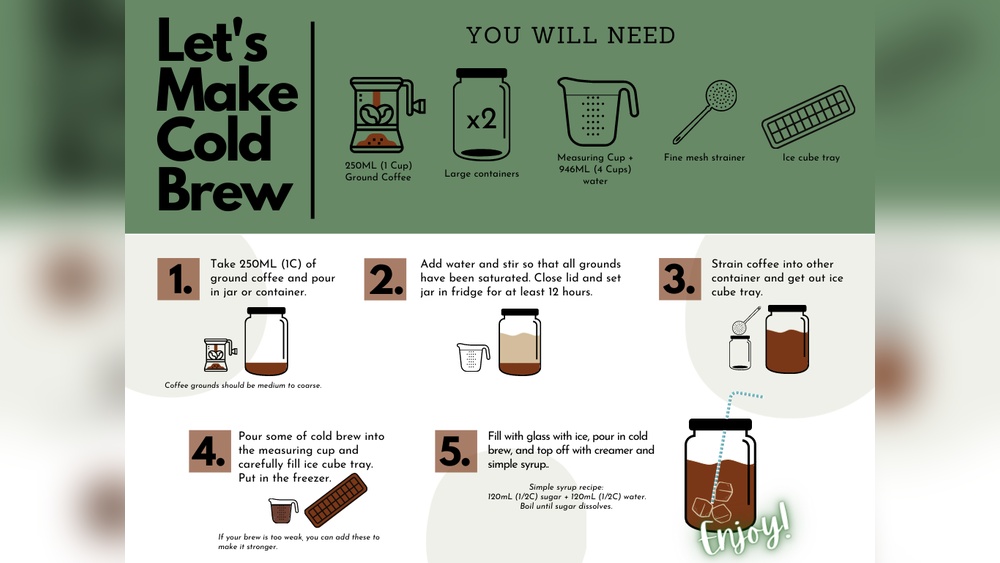
Let’s break down each step in detail. These instructions will yield about 4 cups (1 liter) of cold brew concentrate, which you can dilute to taste.
1. Measure Your Coffee And Water
The classic ratio is 1:4 -1 part coffee to 4 parts water by weight. For example:
- 100 grams (about 1 cup) of coarse ground coffee
- 400 grams (about 4 cups) of cold, filtered water
If you don’t have a scale, 1 cup of whole beans is about 80-100 grams.
Non-obvious insight: Using weight is more accurate than using volume because coffee beans vary in size and density.
If you want a weaker brew, use less coffee or more water. For a stronger concentrate, increase the coffee but keep the same amount of water.
Example: For a small batch, use 50 grams of coffee with 200 ml of water.
2. Combine And Stir
Add the coffee to your jar or French press. Pour in the water. Stir gently to make sure all the grounds are wet. This helps even extraction.
If you skip stirring, some grounds may float on top and never get wet, leading to uneven flavor.
Tip: Use filtered or spring water. Tap water with strong taste or chemicals will affect your coffee.
3. Steep In The Fridge Or Room Temperature
Cover the jar or press with a lid or plastic wrap. Place in the fridge or leave at room temperature. Steep for 12 -18 hours.
- In the fridge: Results in a sweeter, smoother brew.
- At room temperature: Extracts faster, tastes bolder. Don’t go past 18 hours; over-extraction can taste woody or bitter.
Practical example: If you start brewing at 7 pm, you’ll have cold brew ready for the next morning.
Extra advice: If your kitchen is very warm, it’s safer to steep in the fridge to avoid bacteria growth.
4. Strain The Coffee
After steeping, strain the coffee to remove grounds.
- If using a French press, slowly press the plunger, then pour through a coffee filter or cheesecloth into a clean jar.
- If using a jar, pour through a fine-mesh sieve lined with cheesecloth or a coffee filter.
Pro Tip: Double strain if you want extra clarity.
Be patient during straining. Rushing can force small grounds through the filter, making the brew gritty. Let gravity do the work.
Extra insight: If you use a nut milk bag, cleaning is easier and you avoid paper filter waste.
5. Store And Serve
Transfer the cold brew concentrate to a clean, airtight bottle or jar. Keep in the fridge for up to 2 weeks.
Serving suggestions:
- Dilute 1: 1 with water, milk, or plant milk.
- Add ice, syrups, or a splash of cream.
Non-obvious insight: Cold brew concentrate is strong. Always dilute before drinking, unless you like it very bold.
You can also serve cold brew hot by mixing with hot water. This keeps the smooth flavor but warms you up on cold days.
Cold Brew Coffee Ratios: How To Adjust Strength
Everyone has their own taste for coffee strength. Here’s how to adjust your cold brew:
Standard Ratios
- Strong: 1:4 (1 part coffee, 4 parts water)
- Mild: 1:6 (1 part coffee, 6 parts water)
| Batch Size | Coffee (grams) | Water (ml) | Strength |
|---|---|---|---|
| Small (2 cups) | 50 | 200 | Strong |
| Medium (4 cups) | 100 | 400 | Strong |
| Large (8 cups) | 133 | 800 | Mild |
Pro Tip: Start with the standard ratio, taste, and adjust next time. Some people like it strong for mixing with milk or ice.
If you’re making cold brew for a group, ask about their preferences. Some people add a lot of ice, which dilutes the drink.
Extra example: If you love very strong coffee, try a 1:3 ratio and dilute more when serving.
Best Beans For Cold Brew: Flavors And Origins
Here are some popular options for cold brew:
- Ethiopian: Fruity, floral. Tastes bright and refreshing.
- Colombian: Nutty, chocolatey, balanced.
- Brazilian: Low acidity, heavy body, chocolate notes.
- Sumatran: Earthy, spicy, syrupy.
Flavor Profiles By Region
| Origin | Flavor Notes | Acidity | Body |
|---|---|---|---|
| Ethiopia | Berry, floral, citrus | High | Medium |
| Colombia | Nutty, chocolate, caramel | Medium | Medium |
| Brazil | Chocolate, nutty, mild fruit | Low | Heavy |
| Sumatra | Earthy, herbal, spicy | Low | Full |
Practical advice: Choose a bean profile that matches your taste. If you prefer sweet and chocolatey, try Brazilian or Colombian. If you like bright, fruity notes, go for Ethiopian.
Extra tip: Try mixing two origins for a unique house blend. For example, blend Colombian and Ethiopian for a balanced cup.
Cold Brew Vs. Iced Coffee: Key Differences
Understanding the difference helps you choose the right drink.
Brewing Method
- Cold Brew: Steeped cold for 12 -24 hours. No heat.
- Iced Coffee: Brewed hot, then cooled over ice.
Taste
- Cold Brew: Smooth, sweet, low acidity, less bitterness.
- Iced Coffee: Sharper, higher acidity, can taste watery as ice melts.
Caffeine Content
Cold brew can be much stronger, depending on the ratio and dilution.
| Drink | Caffeine per 8oz (approx.) | Flavor |
|---|---|---|
| Cold Brew (undiluted) | 200 mg | Strong, smooth |
| Iced Coffee | 95 mg | Bright, sharp |
Insight: If you’re sensitive to caffeine, dilute your cold brew or use decaf beans.
Extra example: For a morning pick-me-up, cold brew concentrate can give a bigger caffeine boost than two cups of hot coffee.
Creative Cold Brew Recipes And Variations
Once you master the basics, try these popular twists:
1. Cold Brew Latte
Mix cold brew concentrate with milk or plant milk. Add ice. For a sweeter drink, add simple syrup or vanilla.
You can use oat, almond, or coconut milk for different flavors. Top with a sprinkle of cinnamon or nutmeg for extra aroma.
2. Cold Brew Tonic
Pour cold brew over ice and top with tonic water. Add a slice of orange or lemon for a refreshing summer drink.
The bitterness of tonic water pairs well with coffee’s natural sweetness, making this a surprising favorite.
3. Cold Brew With Sweet Cream
Layer sweetened cream (mix heavy cream and a little sugar) on top of cold brew. The cream slowly blends for a café-style treat.
Try adding vanilla extract or a dash of salt to the cream for extra flavor.
4. Spiced Cold Brew
Add a cinnamon stick or a few cardamom pods to the grounds before brewing. The spices infuse gentle flavor.
Other good additions: star anise, nutmeg, or a small piece of ginger.
5. Nitro Cold Brew
Use a whipped cream dispenser and nitrous oxide cartridge to carbonate your cold brew. This creates a creamy, foamy head, just like on tap at coffee shops.
Note: Nitro at home requires special equipment, but regular cold brew is just as delicious.
Extra Variations
- Mocha Cold Brew: Add 1-2 teaspoons of cocoa powder to your grounds before brewing.
- Coconut Cold Brew: Mix concentrate with coconut milk and a bit of honey.
Troubleshooting Cold Brew: Common Problems And Solutions
Not every batch comes out perfect. Here’s how to fix common issues:
Weak Or Watery Taste
- Check your coffee-to-water ratio. Too much water or too little coffee makes weak brew.
- Steep longer -try 18 hours instead of 12.
Bitter Or Woody Taste
- Steeped too long or used fine grind.
- Use coarse grind and keep steeping under 18 hours.
Cloudy Or Gritty Coffee
- Grounds were too fine or not filtered well.
- Double strain with cheesecloth or paper filter.
Mold Or Off Smell
- Coffee not stored in a clean, airtight container.
- Brewed at too warm temperature for too long.
- Always refrigerate after brewing.
Not Enough Flavor
- Try different beans or roast levels.
- Use freshly roasted coffee.
Non-obvious insight: Water quality matters more than most realize. If your cold brew tastes flat, try using bottled spring water.
Extra tip: If your brew is too strong, it’s easy to fix -just add more water or milk when serving. If it’s too weak, you can reduce the amount of ice or add a shot of espresso.
Cleaning And Maintenance Tips
Keeping your equipment clean is crucial for good cold brew:
- Wash jars, French presses, and strainers with soap and hot water after every use.
- Rinse with vinegar to remove old coffee oils if needed.
- Let everything dry fully before storage.
Tip: Old coffee oils can turn rancid and ruin your next batch.
Pro Tip: If you notice any strange taste in your cold brew, check for old residue inside your equipment.
How Long Does Cold Brew Last?
- In the fridge, cold brew concentrate stays fresh for up to two weeks.
- Once diluted, try to drink within 2 -3 days for best flavor.
If you notice sour smell, cloudiness, or mold, throw it out.
Practical advice: Write the brewing date on your bottle, so you always know how old your batch is.
Extra insight: If you use dairy or plant milk, always add it just before drinking to keep the cold brew fresher.
Health Benefits And Caffeine Content
Cold brew has some unique health aspects:
- Lower acidity: Easier on sensitive stomachs.
- Antioxidants: Similar levels to hot coffee.
- Caffeine: Can be double that of regular coffee if undiluted.
Caution: If you have heart problems or are sensitive to caffeine, dilute your cold brew or use less coffee.
Cold brew can also help you avoid added sugars, since it’s naturally sweeter. If you like flavored drinks, add cinnamon or vanilla instead of sugar.
For more information about coffee and health, see this Wikipedia article on coffee.
Cold Brew For Different Diets
Cold brew is naturally:
- Vegan
- Gluten-free
- Dairy-free (unless you add milk or cream)
If you avoid sugar, use unsweetened plant milks or sugar-free syrups.
Extra tip: For a keto-friendly cold brew, add a splash of heavy cream or coconut oil instead of milk.
Scaling Up: Making Large Batches
Want to serve cold brew at a party or for your office? Here’s how:
- Use a large container (5 liters or more).
- Keep the same 1: 4 ratio for concentrate.
- Stir well to wet all grounds.
- Strain in stages -use a big sieve, then filter smaller batches through cheesecloth.
Tip: Large batches need more steeping time for full flavor.
Pro advice: For events, prepare cold brew 24 hours in advance and keep it chilled. Serve over ice with a variety of milks and syrups for guests to customize.
Environmental Impact: Waste And Sustainability
Coffee grounds can be composted. Don’t throw them in the trash -use them in your garden or potted plants. Cold brew uses less energy than hot brewing, especially if you make big batches.
Non-obvious insight: Cold brew is more efficient for batch brewing, reducing daily waste from paper filters and energy use.
You can also use leftover grounds as a natural deodorizer in your fridge or as a body scrub. Cold brew’s long shelf life also means less leftover coffee to throw away.
Cold Brew For Beginners: Common Mistakes To Avoid
- Using pre-ground coffee: It loses freshness and flavor. Always grind just before brewing.
- Using tap water with bad taste: Use filtered water.
- Steeping too long: Over-extraction adds bitterness.
- Not straining well: Grounds left in the brew keep extracting and turn the coffee bitter.
- Forgetting to dilute: Cold brew concentrate is strong. Always add water or milk before drinking.
Extra tip: Don’t rush the steeping process -cold brew needs time for best results. If you’re in a hurry, make a batch ahead.
Experimenting With Flavors
Try these add-ins for creative cold brew:
- Vanilla bean: Add to grounds before brewing for sweet aroma.
- Orange peel: A few strips with the grounds add citrus notes.
- Cocoa nibs: For a chocolaty finish.
- Mint: Add fresh leaves with the grounds or after brewing.
Tip: Start with small batches when experimenting.
You can also try maple syrup, almond extract, or dried coconut. Record your favorite combinations in a notebook to repeat later.
Cold Brew In Different Cultures
Cold brew isn’t new. In Japan, Kyoto-style coffee is made by slowly dripping cold water over grounds. In the US, cold brew became popular in the 2010s, especially in summer.
Practical insight: Try Kyoto-style at home with a slow drip setup, but standard immersion cold brew is much simpler for beginners.
In Vietnam, cold brew is sometimes mixed with sweetened condensed milk for a strong, sweet treat. In Europe, cold brew is often served with sparkling water.
Advanced Cold Brew: Clarifying And Filtering
If you want crystal-clear cold brew:
- Use a paper coffee filter after the first strain.
- Chill the brew, then strain again. Fines (tiny particles) settle at the bottom.
Non-obvious insight: Clarified cold brew tastes lighter and is perfect for mixing with sparkling water or cocktails.
For an even cleaner cup, let your cold brew settle in the fridge for a few hours before the final strain.
Using Cold Brew In Recipes
Cold brew isn’t just for drinking. Try these ideas:
- Coffee ice cubes: Freeze cold brew in trays. Use in iced drinks to avoid dilution.
- Smoothies: Add cold brew to banana or chocolate smoothies.
- Desserts: Use as a base for tiramisu or coffee-flavored cakes.
You can also use cold brew in pancake batter, oatmeal, or even marinades for meats.
Comparing Cold Brew Makers
If you plan to make cold brew often, consider a dedicated cold brew maker.
Popular Types
- French press: Easy to use, doubles as a hot coffee maker.
- Cold brew pitcher: Built-in filter, fits in the fridge.
- Mason jar + filter bag: Cheap and effective.
Comparison
| Device | Ease of Use | Cleaning | Cost | Capacity |
|---|---|---|---|---|
| French Press | Easy | Easy | Medium | 1L |
| Cold Brew Pitcher | Very Easy | Easy | Medium | 1-2L |
| Mason Jar + Filter Bag | Easy | Medium | Low | 1-3L |
Tip: Start with what you have. Upgrade later if you brew often.
Extra advice: Some cold brew makers come with spigots for easy pouring, which is great for large batches.
Cold Brew For Travelers
Making cold brew on the go is possible:
- Pack a small jar and a few filter bags.
- Use pre-measured, single-serve packets of coarse ground coffee.
- Brew overnight in your hotel fridge.
Non-obvious insight: Cold brew is more forgiving to travel delays than hot coffee -you won’t ruin a batch if you steep a few hours longer.
Example: On a camping trip, steep coffee in a water bottle overnight, then strain through a cloth in the morning.
Best Practices For Cold Brew Success
- Always use fresh, coarse ground coffee.
- Use filtered water for best taste.
- Clean all equipment before brewing.
- Steep between 12 and 18 hours for best results.
- Strain thoroughly to avoid bitterness.
- Store concentrate in the fridge, undiluted.
- Dilute before drinking.
Extra tip: Taste your cold brew concentrate before storing. If it’s too strong, dilute a little before refrigerating.
Frequently Asked Questions
What Is The Best Coffee-to-water Ratio For Cold Brew?
The standard ratio is 1:4 (1 part coffee to 4 parts water by weight) for a strong concentrate. You can adjust to 1:6 for a milder brew. Always dilute concentrate before drinking, usually with equal parts water or milk.
Extra detail: If using cups and spoons, remember that 1 cup of whole beans is about 80-100 grams. Always err on the side of more coffee for a stronger brew.
How Long Should I Steep Cold Brew Coffee?
Steep for 12 to 18 hours. Less than 12 hours may result in weak flavor; more than 18 hours can cause bitterness. Room temperature steeps faster, but refrigerating during steeping gives a smoother taste.
Can I Make Cold Brew With Pre-ground Coffee?
Yes, but it’s not ideal. Most pre-ground coffee is too fine, leading to a muddy and over-extracted brew. If using pre-ground, use a filter bag and reduce steeping time. Freshly ground, coarse coffee is best.
How Do I Store Cold Brew And How Long Does It Last?
Store cold brew concentrate in a clean, airtight jar in the fridge. It stays fresh for up to two weeks. Once you dilute it, try to drink within 2 -3 days. Discard if you see cloudiness or smell sourness.
Is Cold Brew Less Acidic Than Hot Coffee?
Yes, cold brew is usually less acidic -up to 67% less than hot coffee. This makes it smoother and easier on sensitive stomachs. Bean origin and roast also affect acidity, so experiment for your best cup.
Making cold brew coffee at home is simple, economical, and gives you full control over the flavor. With the right beans, equipment, and steps, you can enjoy café-quality cold brew every day. Try different beans, play with ratios, and don’t be afraid to experiment.
Once you taste fresh, homemade cold brew, you may never go back to store-bought again.