Coffee is more than just a drink for millions around the world. It’s a daily ritual, a social experience, and a journey of flavors. Among the many brewing methods, two stand out for their simplicity and ability to bring out the best in coffee beans: French Press and Pour Over. If you’re new to home brewing or looking to refine your technique, you might wonder which method fits your taste, lifestyle, and budget. This article guides you through every aspect of French Press and Pour Over, so you can make an informed choice -and brew a better cup every time.
What Is A French Press?
The French Press is one of the oldest and most recognized brewing tools. Its design is simple: a glass or stainless steel cylinder, a plunger with a mesh filter, and a lid. Invented in the 1920s, the French Press is popular for its robust flavor and tactile experience.
Brewing coffee with a French Press means steeping ground coffee in hot water for several minutes, then pressing the plunger to separate the grounds. The result is a rich, full-bodied cup with pronounced oils and sediments. This method gives you more control over brew time and coffee strength, making it a favorite among coffee enthusiasts who want a bold taste.
What Is Pour Over?
Pour Over is both a brewing method and a category of devices. It involves pouring hot water evenly over coffee grounds in a filter, letting gravity pull the brewed coffee into a carafe or mug below. Devices like the Hario V60, Chemex, and Kalita Wave are popular examples.
Pour Over allows for precise control over water flow, temperature, and extraction time. The coffee produced is clean, nuanced, and bright, with a lighter body and more distinct flavors than French Press. Many specialty cafes use Pour Over to showcase single origin coffee explained beans and subtle tasting notes.
Brewing Process: Step-by-step
Understanding how each method works is key to appreciating their differences. Let’s break down the steps for both.
French Press Brewing Steps
- Heat water to about 200°F (just below boiling).
- Add coarse coffee grounds (about 1: 15 coffee-to-water ratio).
- Pour hot water over the grounds, making sure all are saturated.
- Stir gently to mix.
- Place the lid with plunger pulled up. Let steep for 4 minutes.
- Press the plunger slowly to separate grounds.
- Serve immediately to avoid over-extraction.
Pour Over Brewing Steps
- Heat water to 200°F.
- Place filter in dripper and rinse with hot water.
- Add medium-fine coffee grounds (about 1: 16 coffee-to-water ratio).
- Pour a small amount of water to bloom the grounds (30 -45 seconds).
- Slowly pour the rest of the water in circles, keeping grounds saturated.
- Let coffee drain completely (2.5 -4 minutes total).
- Remove dripper and serve.
Equipment Needed
Choosing the right equipment impacts your results. Here’s what you’ll need for each method:
French Press Essentials
- French Press brewer (glass, stainless steel, or ceramic)
- Kettle (preferably with a temperature control)
- Coffee grinder (burr grinder recommended)
- Scale (for accuracy)
- Timer
Pour Over Essentials
- Pour Over dripper (V60, Chemex, Kalita, etc.)
- Paper or metal filters
- Gooseneck kettle (for controlled pouring)
- Coffee grinder
- Scale
- Timer
- Brewing vessel (carafe or mug)
Flavor Profile: What To Expect
The biggest difference between French Press and Pour Over is in the cup. Each method highlights different qualities of the same beans.
French Press Flavor
French Press coffee is known for its full body and rich mouthfeel. The metal mesh filter allows oils and tiny particles into the cup, creating a heavier, sometimes gritty texture. Flavors are bold and deep, with less acidity. You’ll notice chocolate, nut, and earthy notes come forward. This method is ideal for dark roasts and robust blends.
Pour Over Flavor
Pour Over produces a clean cup with clarity and brightness. The paper filter captures oils and fine particles, so the coffee tastes lighter and smoother. You’ll notice more delicate flavors, higher acidity, and fruity or floral notes. Pour Over is perfect for single-origin, light to medium roasts where subtle flavors matter.
Control And Customization
How much control do you want over your coffee? Both methods allow for customization, but in different ways.
French Press Customization
- Steep time: Adjust for stronger or lighter coffee.
- Grind size: Coarser for less bitterness, finer for more extraction.
- Coffee-to-water ratio: Easy to change for personal preference.
However, water temperature and pouring method are less critical here.
Pour Over Customization
- Pour speed and pattern: Directly affect flavor extraction.
- Water temperature: Adjust for acidity and sweetness.
- Grind size: Finer for more body, coarser for clarity.
- Bloom time and total brew time: Fine-tune extraction.
Pour Over gives you more ways to adjust and experiment, making it a favorite for those who enjoy process and precision.
Ease Of Use And Learning Curve
Which is easier for beginners? Let’s compare.
French Press: Simple And Forgiving
French Press is straightforward. You add grounds, pour water, wait, and press. There’s little room for error if you follow basic steps. It’s forgiving if your grind isn’t perfect or you don’t have a gooseneck kettle. Cleanup is easy: just dump the grounds and rinse.
However, beginners often make two mistakes: using too fine a grind (leads to sludgy coffee and hard plunging) and leaving coffee in the carafe too long (results in bitterness). Pouring out all the brewed coffee right after pressing prevents over-extraction.
Pour Over: More Skill, More Reward
Pour Over requires practice. You need to pour water evenly, control timing, and get the grind just right. The right equipment helps, but you’ll need to experiment to avoid under- or over-extraction. Patience pays off: once you master the method, you can unlock complex flavors.
Common mistakes include pouring too quickly (under-extracted, sour coffee), using the wrong filter, or not blooming the grounds. Start with a gooseneck kettle for better results.
Cleaning And Maintenance
No one wants a complicated cleanup, especially first thing in the morning.
French Press Cleaning
French Press brewers collect grounds at the bottom, so you need to dump them out and rinse the mesh filter. Some parts (like the plunger and filter) may need occasional deep cleaning to prevent oil buildup. Most models are dishwasher-safe.
A quick tip: add a little water, swirl, and dump the grounds into the trash -not the sink, to avoid clogs.
Pour Over Cleaning
Pour Over is easy to clean. Throw away the paper filter (or compost it), rinse the dripper, and you’re done. Glass drippers like Chemex need gentle washing to prevent staining, but there are no moving parts or mesh filters to scrub.
Metal filters require a rinse and sometimes a soak.
Cost Comparison
Budget matters when choosing a coffee method. Both French Press and Pour Over can be affordable or expensive depending on your choices.
| Equipment | French Press | Pour Over |
|---|---|---|
| Basic brewer | $15 -$40 | $10 -$30 |
| Premium brewer | $50 -$100+ | $40 -$100+ |
| Filters | None (built-in mesh) | $5 -$15 (pack of paper filters) |
| Kettle | $20 -$60 | $30 -$70 (gooseneck preferred) |
| Grinder | $25 -$150 | $25 -$150 |
French Press is slightly cheaper overall, since you don’t need to buy filters. However, if you invest in a gooseneck kettle and high-end dripper, Pour Over costs can add up.
Time Commitment
How Long Does Each Method Take From Start To Finish?
- French Press: 6 -8 minutes (including boiling, steeping, and cleanup)
- Pour Over: 5 -7 minutes (including boiling, pouring, and cleanup)
French Press takes longer to steep, but Pour Over requires more attention during brewing. Neither method is much faster for a single cup, but Pour Over can be slower if you make multiple cups (since you brew each cup separately, unless using a large Chemex).
Batch Size And Scalability
Some people brew for themselves; others for a group. Here’s how both methods stack up.
French Press: Ideal For Multiple Cups
French Press brewers come in sizes from 12oz to 51oz (1. 5L), enough for 1 -6 cups. You can brew a full carafe and serve several people at once. French Press is convenient for breakfast tables or meetings.
Pour Over: Best For One Or Two
Most Pour Over drippers are designed for single servings (10 -16oz). Chemex models can brew up to 8 cups, but require careful pouring. It’s possible to scale up, but Pour Over is best for personal use or two people. Making coffee for a crowd is more time-consuming.
Portability And Durability
Do you want to brew coffee at home, work, or while traveling?
French Press Portability
French Press brewers made of stainless steel are durable, shatterproof, and retain heat well. They’re great for camping or road trips. Glass models are less portable but popular for home use. Some companies make travel-size presses with insulated walls.
Pour Over Portability
Pour Over drippers are lightweight and compact. Plastic or metal models fit in any bag. All you need is a filter and mug. However, you’ll need access to hot water and a kettle. Pour Over is a popular choice for work or hotel brewing.
Environmental Impact
Coffee Brewing Has An Environmental Cost. Which Method Is Greener?
French Press Sustainability
French Press uses no paper filters and is reusable for years. You only discard the spent grounds, which can be composted. Stainless steel or glass designs are recyclable.
Pour Over Sustainability
Pour Over with paper filters creates more waste, but the filters are often compostable. Reusable metal filters are available for V60 and Chemex, reducing waste. The environmental impact is low if you choose the right accessories.
Health Aspects
Both methods have health pros and cons, especially related to coffee oils.
- French Press coffee contains more cafestol and kahweol, natural compounds that may raise cholesterol when consumed in large amounts over time. However, for most people drinking 1 -2 cups per day, the effect is minor.
- Pour Over coffee uses paper filters, which trap most of these oils, resulting in lower cholesterol-raising compounds. People with cholesterol concerns may prefer this method.
For more on this, see research summarized by the Harvard T.H. Chan School of Public Health.
Popularity And Culture
Both methods have passionate followings.
- French Press is seen as classic, homey, and European. It’s common in homes and some restaurants. The tactile act of plunging is satisfying and ritualistic.
- Pour Over has a “third wave” coffee reputation. It’s the method of choice in specialty cafes and among coffee nerds. The process feels artistic and meditative.
In the end, culture and habit often shape which method people love.
Common Mistakes And How To Fix Them
Beginners often make similar mistakes with each method. Avoid these for better coffee.
French Press Mistakes
- Using fine coffee grounds. This causes muddy, bitter coffee. Always use a coarse grind.
- Leaving coffee sitting after brewing. Coffee continues to extract and gets bitter. Pour it all out after plunging.
- Not cleaning the filter. Oils build up and affect taste. Disassemble and clean regularly.
Pour Over Mistakes
- Pouring water too quickly. Leads to under-extracted, weak coffee. Pour slowly and evenly.
- Skipping the bloom. Carbon dioxide remains, making coffee sour or flat. Always bloom for 30 -45 seconds.
- Wrong filter or filter not rinsed. Paper taste transfers to coffee. Use the right filter and rinse before brewing.
Advanced Tips For Better Brewing
If you want to take your coffee to the next level, try these insights:
- Preheat your brewer and mug. Warm equipment keeps brewing temperature stable and improves extraction.
- Weigh your coffee and water. Even small changes affect taste. A scale gives repeatable results.
- Try different beans and roasts. Lighter roasts shine in Pour Over; dark roasts are bold in French Press.
- Experiment with ratios and times. Start with 1: 15 (French Press) or 1:16 (Pour Over) and adjust based on taste.
- Grind just before brewing. Freshly ground coffee has more aroma and flavor.
Taste Test: Real-world Comparison
Let’s compare the same coffee brewed both ways.
Bean: Ethiopian Yirgacheffe, light roast
- French Press: Sweet, mild acidity, fuller body. Chocolate and berry notes, but some muddiness.
- Pour Over: Bright, floral, crisp acidity. Blueberry and jasmine notes are clear and clean.
Bean: Sumatra Mandheling, dark roast
- French Press: Deep, earthy, heavy mouthfeel. Tobacco and cocoa flavors.
- Pour Over: Less body, more acidity, but some flavors muted.
The method you choose can highlight or hide the unique qualities of your beans.
When To Choose French Press
French Press is best for:
- People who want bold, rich coffee
- Groups or families (easy to brew multiple cups)
- Those who dislike waste (no filters)
- Campers and travelers (with stainless steel models)
- Dark roast lovers
If you value simplicity and body, French Press is your friend.
When To Choose Pour Over
Pour Over excels for:
- Single-cup drinkers
- Fans of bright, complex flavors
- Light or medium roast drinkers
- Those who enjoy process and precision
- People with cholesterol concerns
If you love exploring flavors and don’t mind a little technique, Pour Over is the way to go.
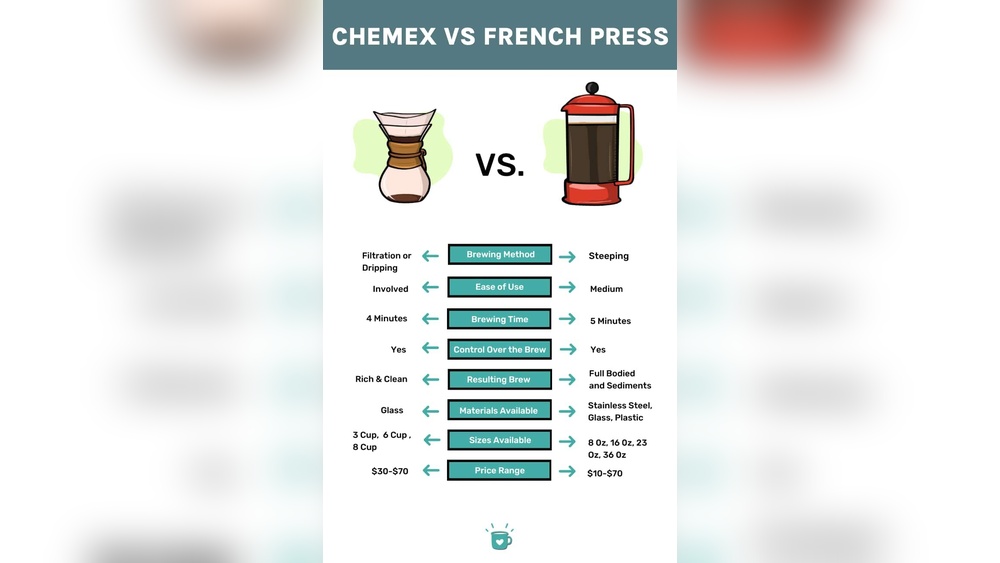
French Press Vs Pour Over: Side-by-side Data
To make things clearer, here’s a quick comparison of key factors:
| Feature | French Press | Pour Over |
|---|---|---|
| Flavor profile | Full-bodied, bold, less acidic | Clean, bright, nuanced |
| Body | Heavy, sometimes gritty | Light, smooth |
| Grind size | Coarse | Medium-fine |
| Filters needed | No (mesh filter) | Yes (paper or metal) |
| Brew time | 4 -5 min steep | 2.5 -4 min pour |
| Batch size | 1 -6 cups | 1 -2 cups (or up to 8 with Chemex) |
| Skill needed | Low | Medium to high |
| Cleanup | Rinse brewer, clean filter | Discard filter, rinse dripper |
| Cost (starter kit) | Low to medium | Low to high |
French Press And Pour Over In The Specialty Coffee World
The rise of specialty coffee changed how people view these methods. Baristas and home brewers use both to highlight different beans. Many coffee competitions use Pour Over, especially for lighter, single-origin coffees. French Press is still respected for its simplicity and ability to showcase blends.
In the specialty world, Pour Over is often seen as more “artisanal,” but both methods have their place. The best brewers understand how to use each tool for the right beans and occasion.
Which Method Is Right For You?
Choosing between French Press and Pour Over depends on your needs, preferences, and lifestyle.
- If you want ease, bold flavor, and group brewing, French Press wins.
- If you enjoy precision, clean cups, and exploring flavors, try Pour Over.
Many coffee lovers own both. They use French Press for mornings or guests, and Pour Over for quiet moments and new beans.
If you’re still unsure, ask yourself:
- Do I want to make one cup or several?
- Do I prefer heavy, rich coffee or clean, bright flavors?
- Am I willing to practice and experiment?
- Do I want a simple routine or a mindful ritual?
Your answers will guide you to the right method -or encourage you to try both.
Frequently Asked Questions
Does French Press Coffee Have More Caffeine Than Pour Over?
French Press and Pour Over can have similar caffeine levels, but French Press often extracts slightly more caffeine due to longer steeping and finer particles in the cup. However, the difference is small. The caffeine content depends more on the coffee-to-water ratio and type of beans.
Can I Use The Same Coffee Beans For Both Methods?
Yes, you can use any beans for French Press or Pour Over. However, the grind size and roast can affect flavor. Use a coarse grind for French Press and a medium-fine grind for Pour Over. Lighter roasts often taste better in Pour Over, while darker roasts are great in French Press.
Which Method Is Better For Beginners?
French Press is generally easier for beginners because it’s less sensitive to technique. Pour Over takes more practice to master pouring and timing. However, both can make excellent coffee with a little learning.
How Do I Avoid Bitterness In French Press Coffee?
Bitterness usually comes from over-extraction. Use a coarse grind, don’t let coffee sit in the press after plunging, and keep steeping time to 4 -5 minutes. Clean your press regularly to prevent old oils from affecting taste.
Is Pour Over Healthier Than French Press?
Pour Over coffee is lower in cafestol and kahweol, compounds that can raise cholesterol. This is because paper filters trap these oils. If you have cholesterol concerns, Pour Over may be the healthier choice.
Whether you choose the tactile pleasure of the French Press or the precise ritual of the Pour Over, both methods can transform your daily cup into something special. Each approach brings out unique qualities in your beans and lets you control your coffee experience. Try both if you can -discover which fits your taste, your time, and your lifestyle best. Great coffee is about more than brewing; it’s about enjoying the process and sharing the results. Happy brewing!